


At 47, I find myself firmly in the midst of perimenopause, a stage of life I thought I understood until I actually arrived here.
I knew about hot flushes and unpredictable periods. What I hadn't appreciated was the sheer variety of ways fluctuating hormones can make themselves known. The broken sleep, brain fog, aching joints, changes in skin, dips in energy, weight gain and, of course, those 3am night sweats that leave you wondering how one human being can generate that much heat while doing absolutely nothing.
Perimenopause, it turns out, is about far more than just periods winding down.
As oestrogen levels fluctuate and decline, changes can be felt and seen throughout the body, from our bones and muscles to our skin, mood, sleep and cognitive function. It makes this an important time to think about how we nourish ourselves for the decades ahead.
And that is where an ancient green leaf called moringa has become my new go-to.
What exactly is moringa?
Moringa oleifera has been used as both a food and traditional remedy for centuries across Africa and Asia. Sometimes known as the “Miracle Tree”, its leaves have been valued for generations for their impressive nutritional profile.
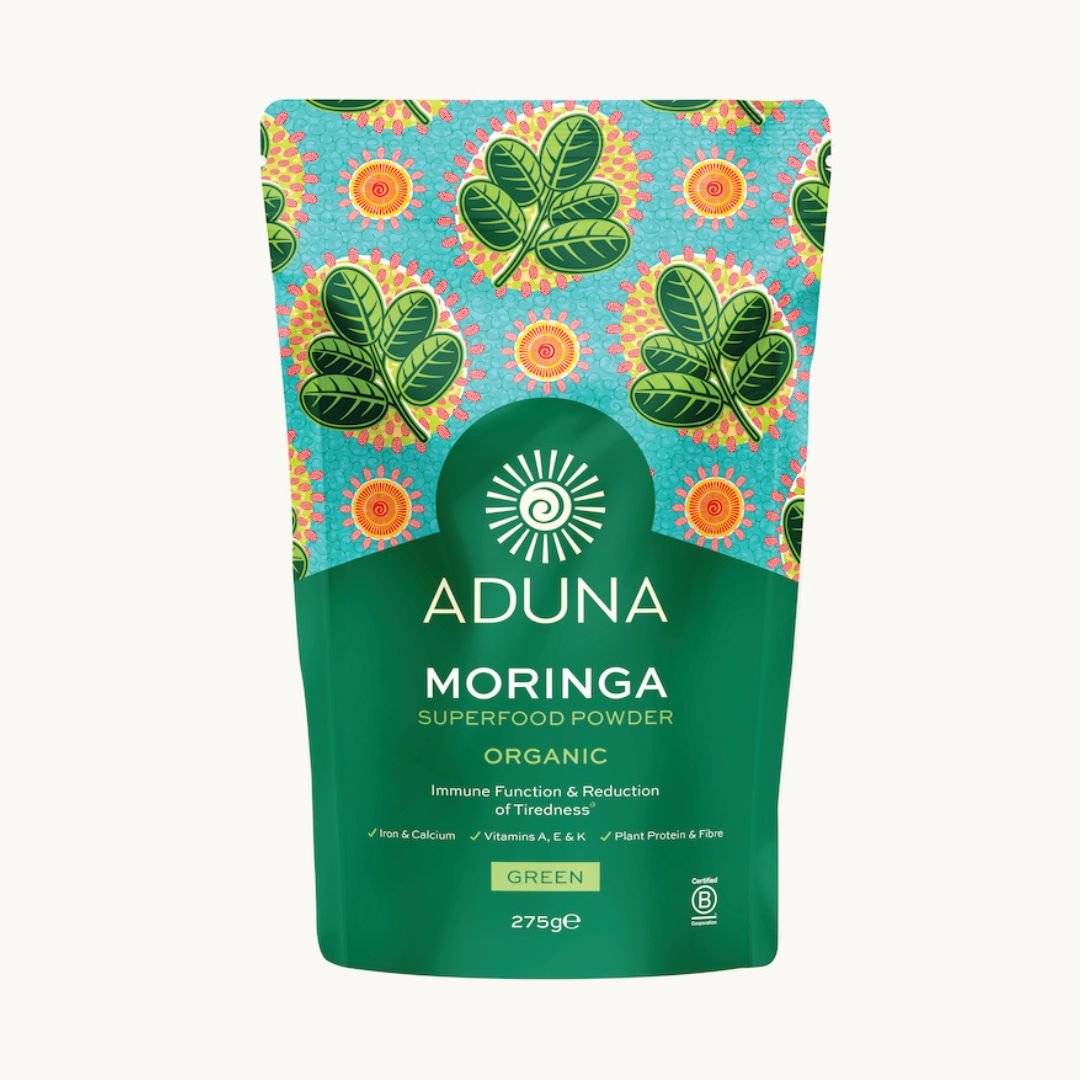
Moringa naturally provides iron, calcium, vitamins A, E and K, fibre and plant protein.
These are nutrients I probably didn't give much thought to in my 20s and 30s, but at 47, I certainly do now. As our bodies move through perimenopause, our nutritional needs deserve a little more attention, and this small green leaf brings rather a lot to the table.
Supporting our bones for the future
I'll admit, bone health wasn't exactly at the top of my list when perimenopause began. When you're dealing with everything else it throws at you, it's easy to forget about the things you can't see.
And our bones are one of them.
As oestrogen levels fall, we can begin losing bone density without realising it. Osteoporosis can develop silently over many years, sometimes only becoming apparent when a bone breaks. Which is why looking after our bones now is so important.
Moringa naturally provides calcium, essential for maintaining healthy bones. In fact, a 10g serving of Aduna Moringa Powder contains around 198mg of calcium, approximately a quarter of our daily reference intake. Not bad for one little green leaf! It also contains vitamin K, which contributes to maintaining normal bones, alongside plant protein.
Another plant worth mentioning here is hibiscus, which also contains calcium and can be a lovely addition to a varied diet.
Looking after my bone health is certainly something I wish I'd paid more attention to years ago, but it's hardly the first thing that springs to mind when you're navigating perimenopause. Still, better late than never, and adding moringa to my diet is one small way I'm doing my bit!
What about the menopausal middle?
We can't talk about perimenopause without mentioning the weight gain. Or, as I'm discovering, the mysterious ability for your body to suddenly start storing weight in places it never seemed interested in before.
Changes in body composition are common during perimenopause and menopause. We can begin carrying more fat around our middle while gradually losing muscle, which is why the conversation needs to be about more than the number on the scales.
Moringa contains fibre and around 25% plant protein. Fibre is an important part of a balanced diet, helping to support healthy digestion and keeping things moving along nicely. It can also help us feel fuller for longer.
Protein, meanwhile, helps us maintain muscle mass, something that becomes increasingly precious as we age.
Now, I'm not saying moringa is a magic weight-loss powder, because wouldn't that be lovely! But I am enjoying making it part of a more mindful approach to eating, alongside staying active and looking after my changing body. I've become much more conscious of what I'm eating and how I'm nourishing myself, rather than simply worrying about what the scales are telling me.
What about perimenopausal skin?
Our skin is another area where these hormonal changes can make themselves known, and it's something I've always been particularly fascinated by.
As oestrogen declines, so can collagen production, elasticity and hydration, which explains why our skin can begin to feel drier, thinner or simply different.
Moringa contains vitamin A, which contributes to the maintenance of normal skin, alongside vitamin E and naturally occurring plant compounds with antioxidant activity. It also provides plant protein and all nine essential amino acids, which our bodies use to make proteins, including collagen.
For me, it's a reminder that looking after our skin isn't just about what we put on it, but also what we put into our bodies. While we can't stop our skin from ageing, we can take steps to help slow some of the visible signs and support our skin as our hormones change.
Tired, foggy... or just perimenopausal?
Then there is the brain fog.
Walking into a room and forgetting why you're there. Losing a perfectly ordinary word halfway through a sentence. Opening your phone to do something and, thirty seconds later, having absolutely no idea what that something was.
If you know, you know.
Night sweats, hot flushes and vivid dreams don't help either. Interrupted sleep can leave us exhausted and struggling to concentrate the following day.
This is where iron becomes particularly important. It contributes to normal cognitive function and helps reduce tiredness and fatigue, and moringa happens to contain it.
When we're juggling hormones, work, children, relationships and everything else life throws at us, giving our bodies the right fuel feels more important than ever.
Moringa sadly can't tell me why I've walked upstairs or locate the glasses already sitting on my head. There are apparently limits to the Miracle Tree.
What does the research say?
I've been making moringa part of my daily routine for five months now, and I've become increasingly curious about the research behind this remarkable little leaf.
One study1 involving 90 postmenopausal women aged between 45 and 60 explored the effects of drumstick (Moringa oleifera) and amaranth (Amaranthus tricolor) leaf powder supplementation over three months. Participants received either 7g of drumstick leaf powder or 9g of amaranth leaf powder daily. Researchers observed significant improvements in several measures of antioxidant status, including serum retinol, serum ascorbic acid and antioxidant enzyme activity, alongside a reduction in malondialdehyde, a marker of oxidative stress.
What I find particularly encouraging is that researchers are exploring moringa in women at this stage of life. It's lovely to see more attention being given to our nutritional needs, particularly when so much of the conversation around menopause focuses on what we're losing rather than how we can support ourselves.
For me, making moringa part of my routine is one small way of paying more attention to what I eat and how I nourish myself for the years ahead.
A small daily habit
One of the things I like most about moringa is that it doesn't require me to overhaul my life.
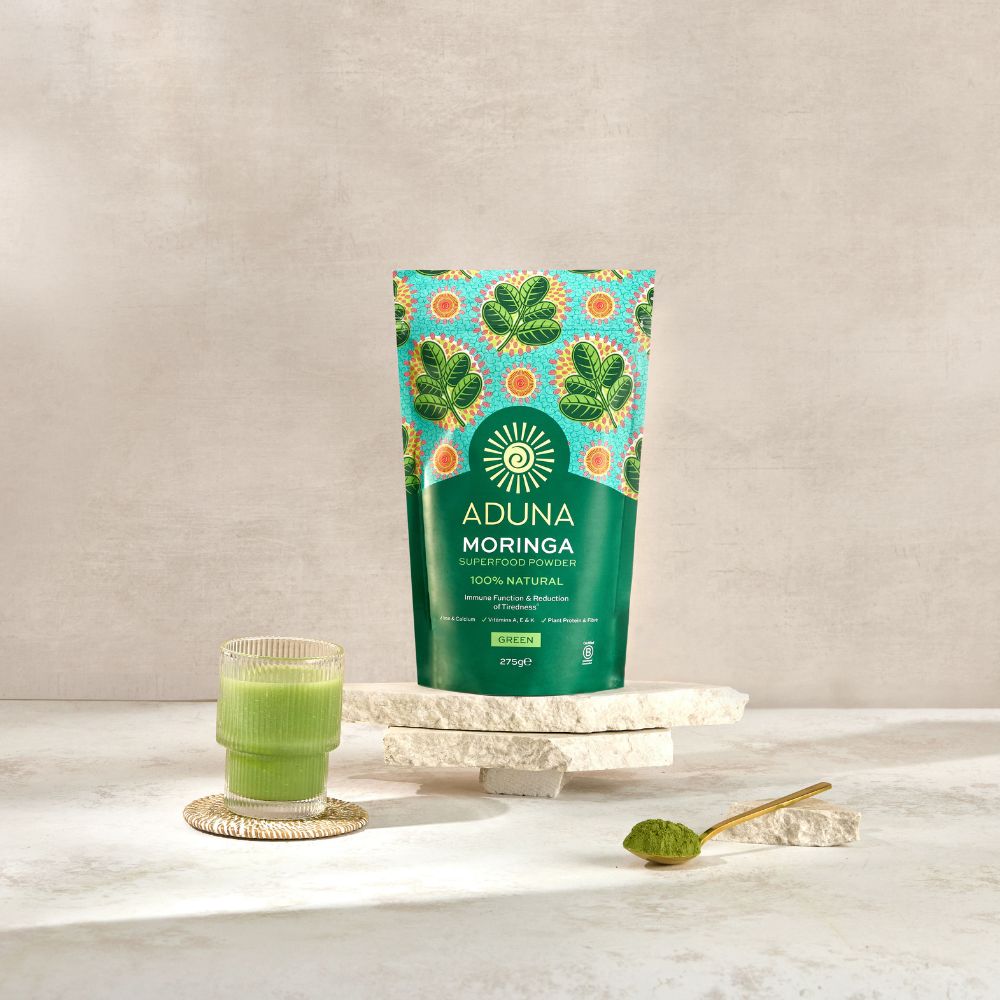
Start with half a teaspoon of Moringa Powder daily and gradually build up to 2–4 teaspoons, or around 10g, following the product's guidance. Its mild, spinachy flavour makes it easy to blend into smoothies, stir through soups or sprinkle over savoury dishes.
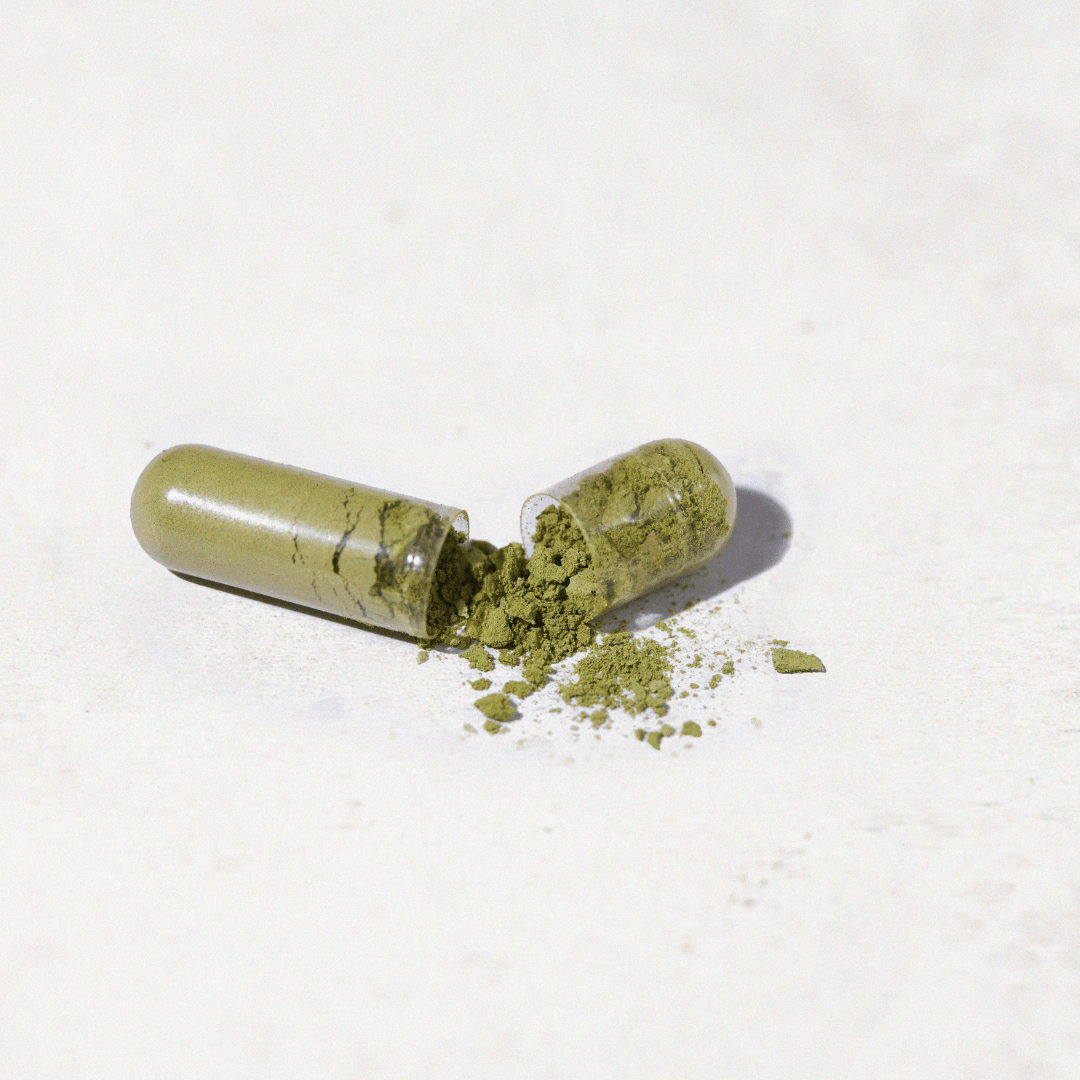
And if powders aren't your thing, there are other ways to introduce moringa into your routine, from convenient capsules and comforting herbal tea to moringa beauty oil for a little extra skincare nourishment.
Personally, I love keeping things simple. At a stage of life that can already feel complicated enough, I'm not looking for more rules or another impossible wellness routine, just small things I can realistically keep doing.
Perimenopause isn't an illness, although there are days when it can feel like one. Nor is it something we need to “fix”. It's a natural transition, one our mothers and grandmothers went through, often with far less conversation and support than we have today.
I think that's why I want us to talk about it more.
We can eat well, move our bodies, protect our bones, nourish our skin, prioritise sleep and ask for help when we need it. And perhaps add a little moringa to our morning smoothie along the way.
Because ageing isn't something to fear, and the goal certainly isn't to stay 30 forever.
It's to look after the woman we are today, while giving the 57, 67 and 77-year-old versions of ourselves the strongest possible foundations to stand on.
Reference
- Kushwaha, S., Chawla, P., & Kochhar, A. (2014). Effect of supplementation of drumstick (Moringa oleifera) and amaranth (Amaranthus tricolor) leaves powder on antioxidant profile and oxidative status among postmenopausal women. Journal of Food Science and Technology, 51(11), 3464–3469.